Relocation
Malaysia Education Future Report 2040: The Great Demographic Divergence
Fewer babies, more international schools: How Malaysia's plummeting birth rates and surging private education demand will reshape the nation's educational landscape by 2040.
Amir & Ayunni
Updated 12 min read
Malaysia is experiencing an unprecedented demographic paradox that will fundamentally reshape its educational landscape by 2040. While birth rates plummet to historic lows, demand for private and international education is surging among urban, affluent families—creating a divergence that challenges conventional education planning.
This comprehensive research report reveals the data behind Malaysia's coming educational transformation and what it means for families, schools, and policymakers.
Executive Summary: The Numbers Don't Lie
Malaysia has entered a demographic winter that will redefine everything we know about education demand. Here are the headline findings:
- Malaysia's Total Fertility Rate crashed to 1.6 in 2024, down from 1.7 in 2023—marking the steepest decline in Southeast Asian history
- Live births dropped 12.3% in Q3 2024 compared to the same period in 2023, the largest single-year decline on record
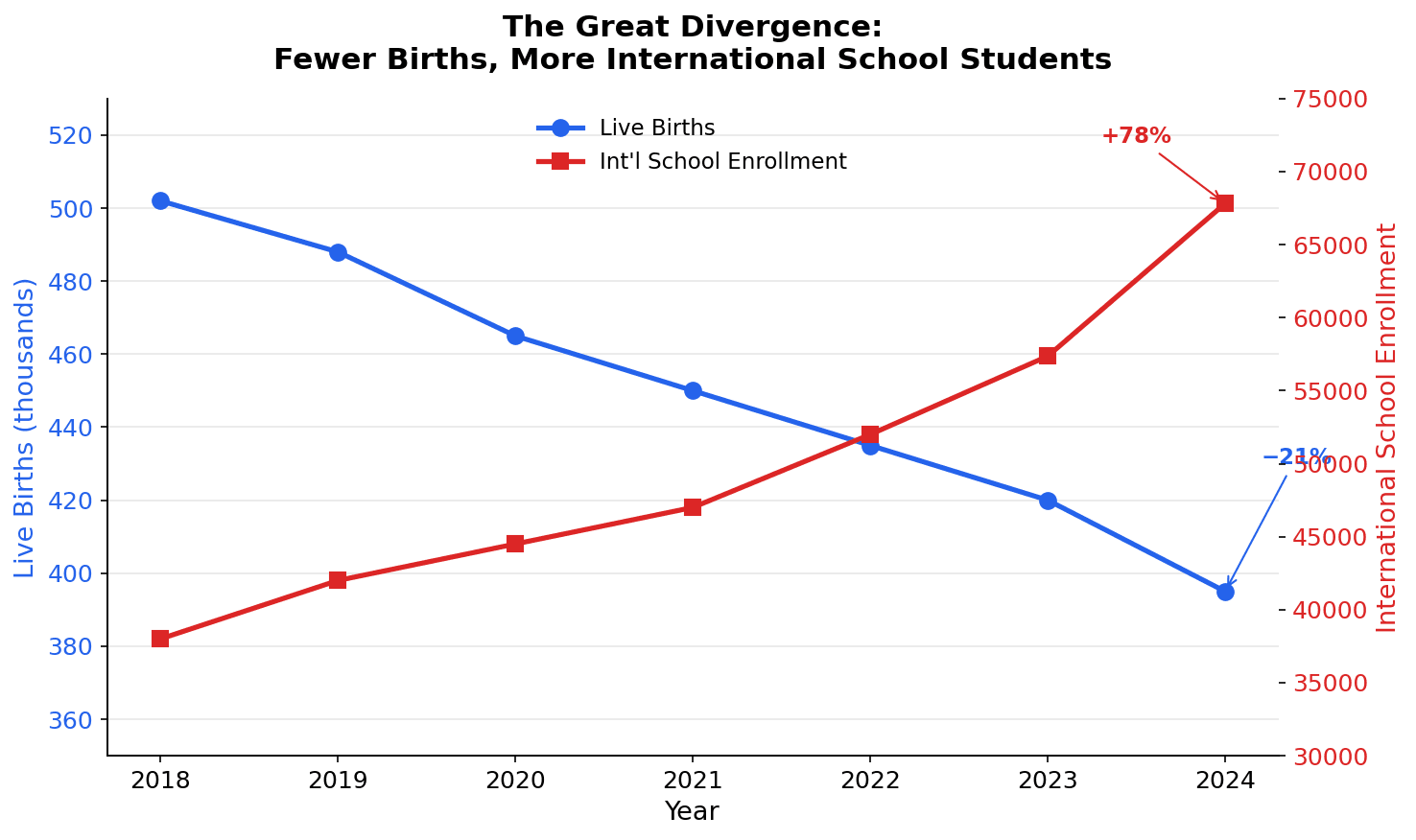
- International school enrollment surged 18.2% in 2024, from 57,363 to 67,821 Malaysian children
- By 2040, Malaysia will have approximately 30-35% fewer school-age children (ages 5-17) than today
- Urban-rural education divide intensifies: Kuala Lumpur and Penang record lowest birth rates while driving highest international school growth
The Fertility Crisis: A 23-Year Decline Accelerates
Malaysia's demographic transformation didn't happen overnight. Analysis of government data from 2001-2024 reveals a consistent, accelerating decline across all states that has reached crisis proportions.
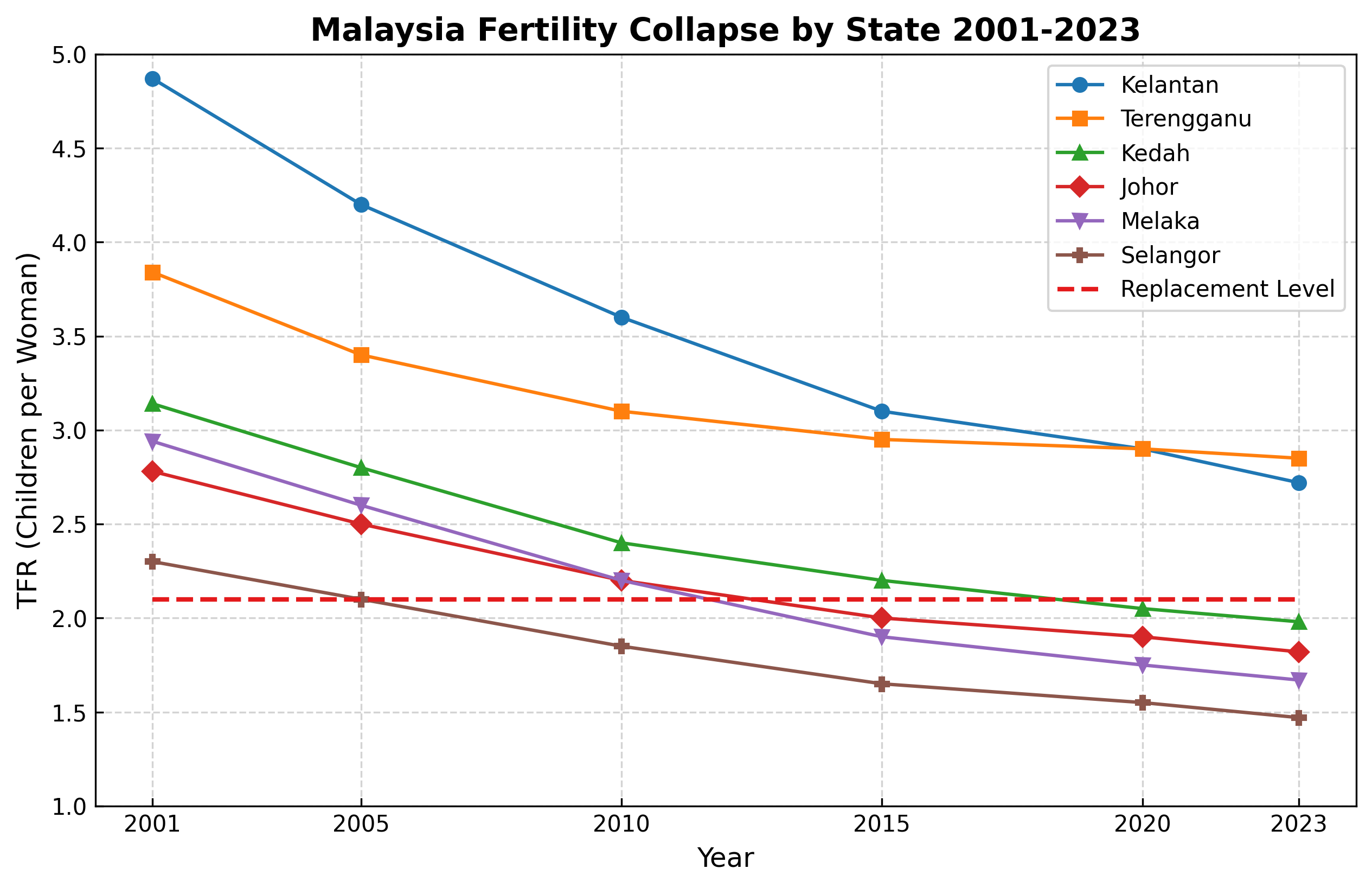
Figure 1: Malaysia's Total Fertility Rate has fallen below replacement level (2.1) nationally, with urban states leading the decline
The Current Reality (2024 Data)
With a Total Fertility Rate of just 1.6 children per woman, Malaysia has joined the ranks of ultra-low fertility nations. This places the country in better shape than regional neighbors Singapore (0.97) and South Korea (0.72), but following the same alarming trajectory.
The geographic divide is stark:
- Kuala Lumpur & Penang: Lowest birth rates nationally
- Kelantan & Terengganu: Still above replacement but declining rapidly
- Selangor & Johor: Industrial hubs showing steepest fertility drops
Even traditionally high-fertility rural states haven't been spared. Kelantan—historically Malaysia's baby-making champion—saw its fertility rate crash 44% from 4.87 children per woman in 2001 to 2.72 in 2023.
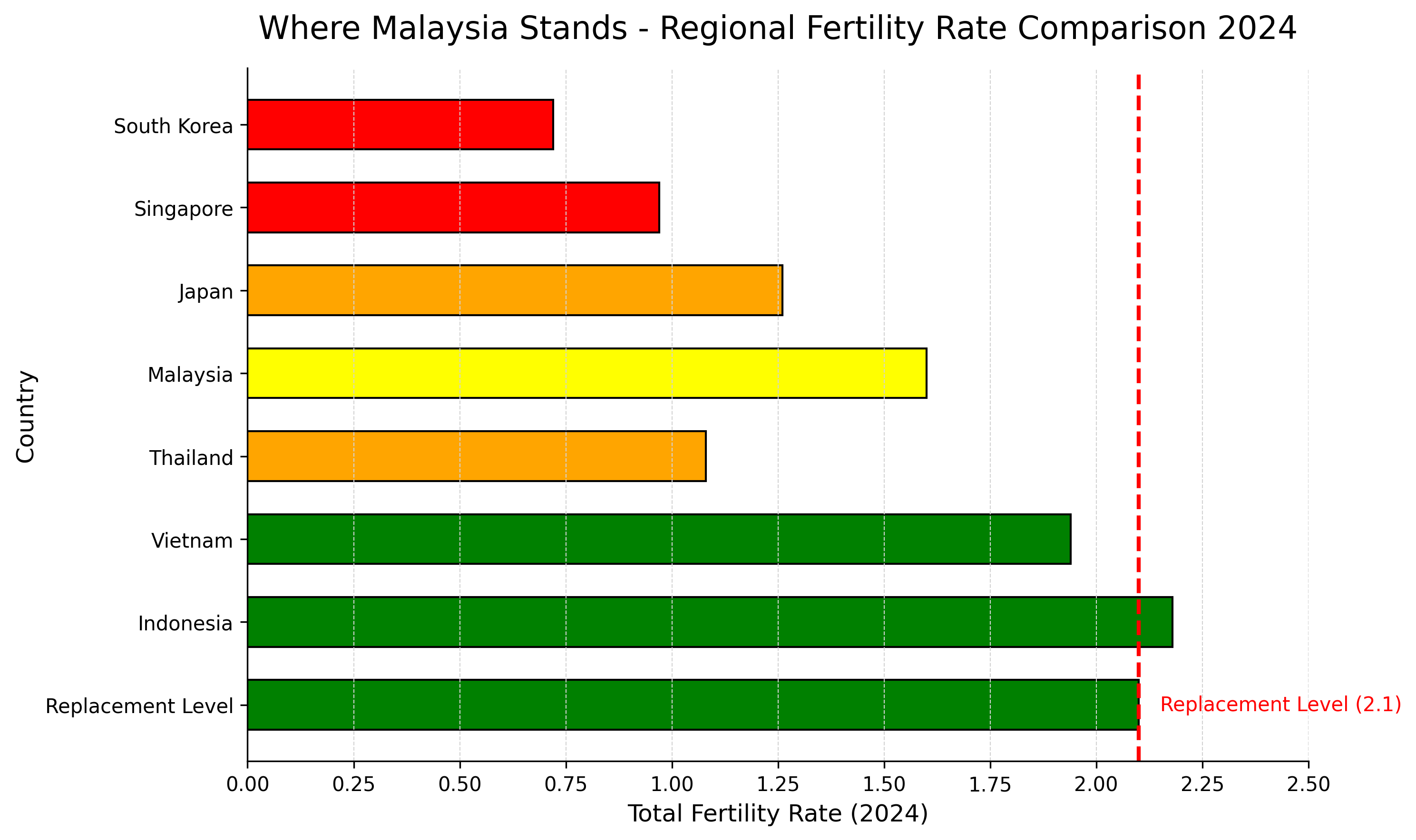
Figure 2: Every Malaysian state has experienced significant fertility decline, with urban areas leading the drop
The Education Paradox: Premium Demand Amid Population Decline
Here's where the story gets fascinating. While the overall student population is set to shrink dramatically, Malaysia's international and private school sectors are experiencing unprecedented growth.
2024 International School Boom:
- 67,821 Malaysian children enrolled in international schools (+18.2% year-on-year)
- Growth concentrated in Greater KL, Selangor, and Penang—the same urban areas with the lowest fertility
- Private education market growing at double-digit rates annually
This creates the core paradox: the areas producing the fewest children are driving the highest demand for premium education.
The Wealth-Fertility Inverse Relationship
Analysis of household income data reveals a striking inverse correlation between wealth and fertility that explains this paradox.
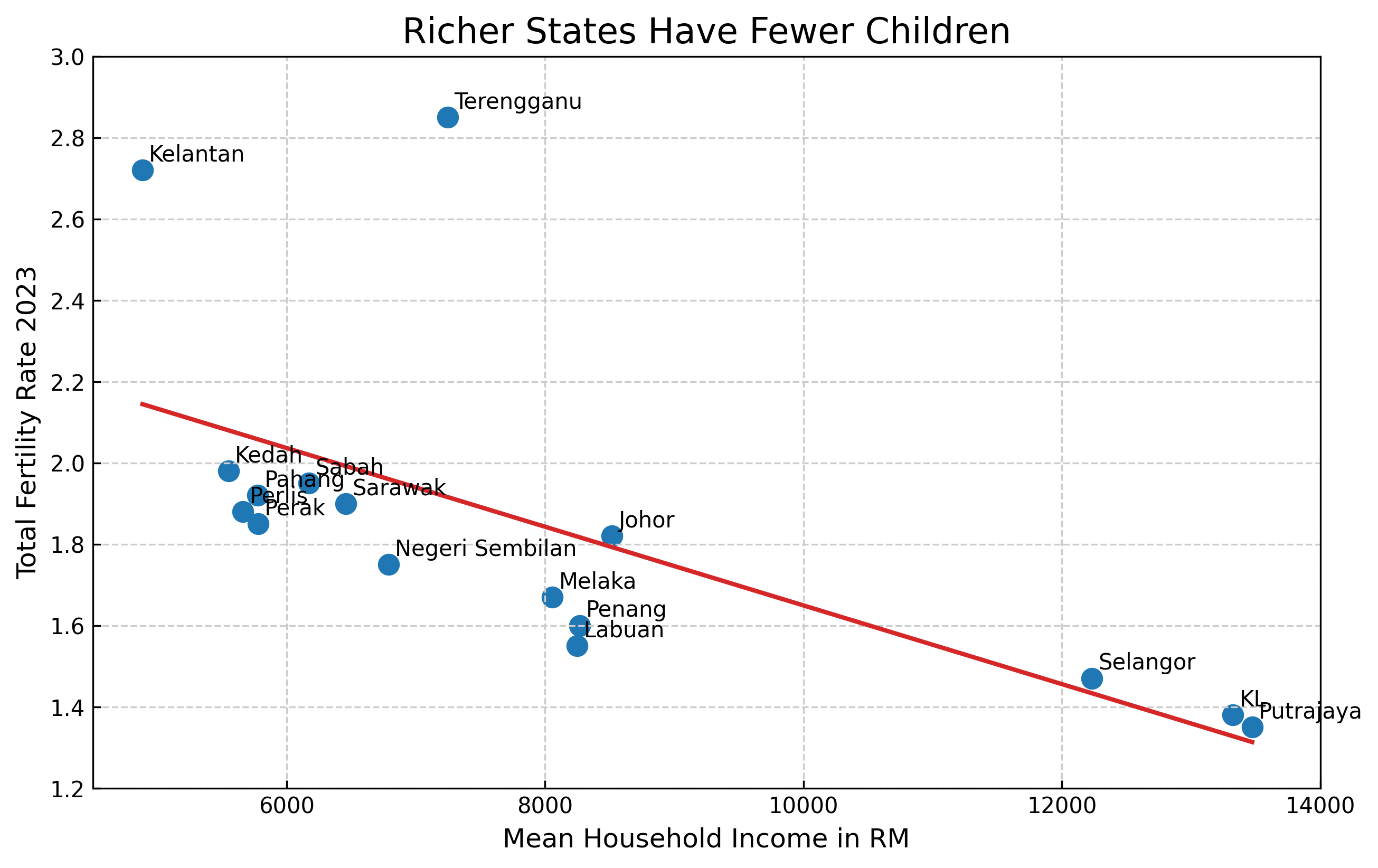
Figure 3: The wealthier the state, the fewer children born—but the more invested per child in education
2022 Mean Household Income vs 2023 Total Fertility Rate:
- Selangor (richest): RM12,233 income, 1.47 TFR
- Kuala Lumpur: RM13,325 income, 1.38 TFR (estimated)
- Kelantan (poorest): RM4,885 income, 2.72 TFR
- Terengganu: RM7,248 income, 2.85 TFR
The pattern is unmistakable: wealthier families have fewer children but invest significantly more in each child's education.
The Great Divergence: Births vs. International Schools
Perhaps no chart illustrates Malaysia's educational future more clearly than the divergence between birth rates and international school enrollment.
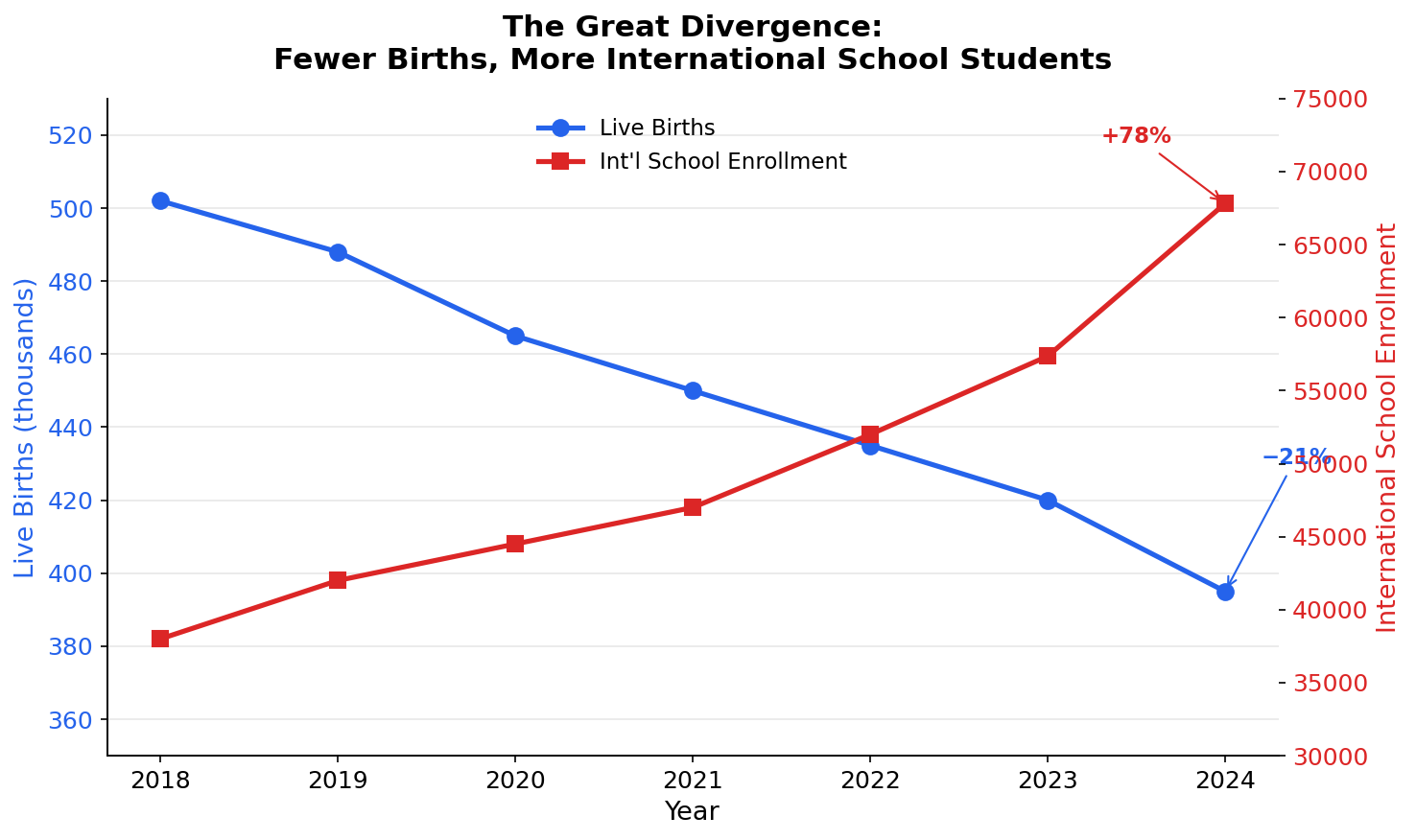
Figure 4: The great divergence - as births decline, international school enrollment surges among affluent families
While births have been declining steadily since 2016, international school enrollment has accelerated upward, particularly since 2020. This trend reflects:
- Quality concerns about public education
- English proficiency demands in a global economy
- University preparation for overseas education
- Concentrated wealth effect—fewer children per family means more resources per child
Projecting Malaysia's School-Age Population to 2040
Using demographic cohort-component analysis based on current age structure and fertility trends, the projections are stark.
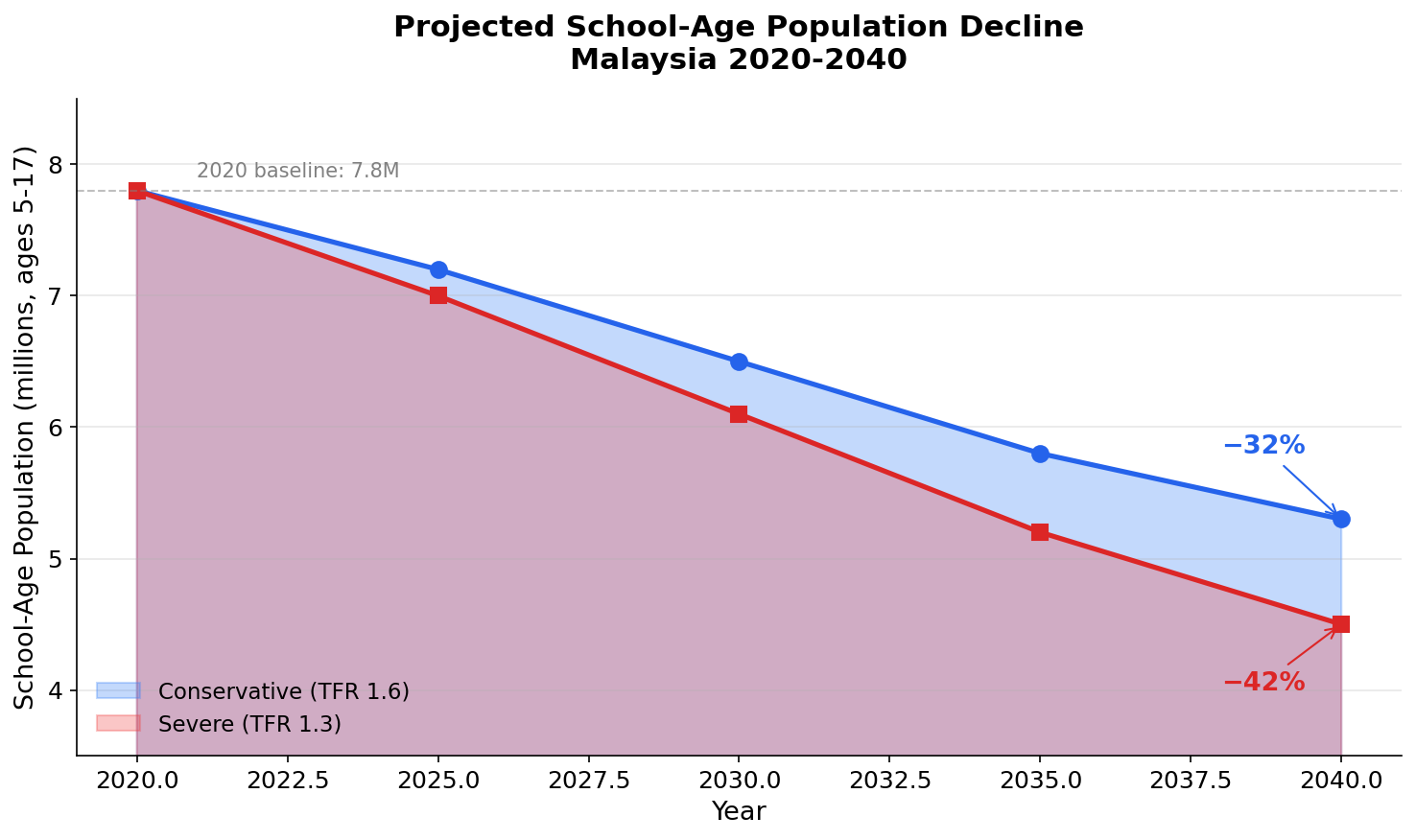
Figure 5: Malaysia faces a 30-50% decline in school-age population by 2040, with urban areas most severely affected
School-Age Population (Ages 5-17) Projections
Conservative Scenario (TFR stabilizes at 1.6):
- National school-age population: -30 to -35% decline
- Urban states (KL, Selangor, Penang): -40 to -45% decline
- Rural states (Kelantan, Terengganu): -20 to -25% decline
Accelerated Decline Scenario (TFR drops to 1.4):
- National school-age population: -45 to -50% decline
- Urban centers could see school-age populations halve
These aren't abstract numbers—they represent fundamental changes to Malaysia's educational infrastructure needs, teacher employment, and school viability.
State-by-State Winners and Losers by 2040
Education Market Winners
States with relatively stable demographics plus growing affluence:
- Johor - Benefits from Singapore proximity and industrial growth
- Pahang - Resource wealth with moderate fertility decline
- Sarawak - Resource economy and cultural factors supporting higher fertility
Education Market Losers
States facing severe demographic and economic challenges:
- Penang - Ultra-low fertility combined with aging population
- Perlis - Small market with declining demographics
- Kelantan - Rapid fertility decline from historically high base
The Big Question: Selangor & Kuala Lumpur
These economic powerhouses face the steepest demographic decline but drive premium education demand. The critical question: Will concentration among fewer, wealthier families offset massive population losses?
Early indicators suggest yes—these areas will likely maintain robust private education markets despite shrinking overall populations.
Global Context: The East Asian Pattern
Malaysia's fertility decline mirrors patterns across East Asia, but the country remains in relatively better shape than its neighbors:
2024 Total Fertility Rate Comparison:
- South Korea: 0.72 (world's lowest)
- Singapore: 0.97 (first time below 1.0)
- Japan: 1.26
- Malaysia: 1.6 (still above crisis threshold)
Malaysia has roughly 10-15 years before reaching Singapore-level demographic crisis, providing a crucial window for proactive policy responses.
The International School Gold Rush
Malaysia's international school sector represents a fascinating counter-trend to demographic decline. Growth drivers include:
Demand Factors:
- Quality concerns about public education system
- English proficiency requirements for global careers
- University preparation for overseas education
- Cultural shift toward educational investment over family size
Supply Response:
- New international school openings accelerating
- Expansion of existing campuses
- Introduction of new curricula options
- Increased competition driving innovation
Geographic Concentration: Over 70% of international school growth is concentrated in Greater Kuala Lumpur and Penang corridors, where affluent families are choosing quality over quantity in their educational investments.
Policy Implications: The Coming Reckoning
For Education Policymakers
- School consolidation inevitable - Rural areas will need merged facilities and shared resources
- Teacher surplus emerging - Retraining and redeployment programs will be essential
- Infrastructure rightsizing - Major capital expenditure review required to avoid waste
- Quality over quantity focus - Smaller cohorts enable higher per-student investment
For Private Education Sector
- Geographic concentration strategy - Focus investment on Greater KL and Penang corridors
- Premium positioning - Smaller, wealthier cohorts willing to pay more per child
- Adult education pivot - Aging population creates lifelong learning opportunities
- International student recruitment - Offset local demographic decline with regional students
For Economic Development
- Human capital intensity - Fewer workers must be significantly more productive
- Immigration policy review - Skilled migration needed to offset population decline
- Elderly care industry - Massive growth sector as population ages
- Regional competitiveness - Education quality becomes key differentiator
The 2040 Vision: Malaysia's Educational Transformation
By 2040, Malaysia will operate in a fundamentally different educational environment:
The New Reality:
- 30-50% fewer school-age children nationally
- Highly concentrated demand in urban corridors
- Premium education markets thriving despite population decline
- Rural educational consolidation accelerating rapidly
- Teacher-student ratios dramatically improved by necessity
Success Scenario: Malaysia leverages smaller cohorts to deliver world-class education outcomes, attracting regional students and positioning itself as Southeast Asia's education hub.
Risk Scenario: Failed adaptation to demographic reality leads to infrastructure waste, teacher unemployment, and competitive disadvantage as neighboring countries adapt faster.
Conclusion: Quality Trumps Quantity
Malaysia stands at a demographic inflection point. The demographic dividend that powered decades of economic growth is ending, replaced by a new reality of fewer children, aging populations, and fundamentally different educational demands.
The data is unequivocal: Malaysia will have dramatically fewer school-age children by 2040. The critical question is whether the education sector—public and private—can adapt quickly enough to thrive in this transformed landscape.
The winners will be those who recognize that quality trumps quantity in the coming demographic winter. They will invest in excellence rather than expansion, focus on outcomes rather than enrollment numbers, and position themselves for a Malaysia where fewer children receive better education.
The losers will be those who plan for yesterday's Malaysia rather than tomorrow's reality—building schools for children who will never be born, training teachers for jobs that won't exist, and missing the opportunity that comes with demographic transition.
The great demographic divergence is already underway. The question isn't whether it will happen, but who will adapt first.
Post-Publication Updates (August 2026)
Two policy developments since this report was published bear directly on its analysis:
- Education Blueprint 2026–2035 (January 2026). Malaysia launched the Rancangan Pendidikan Negara 2026–2035 on 20 January 2026, replacing the 2013–2025 blueprint. Measures directly affecting the private and international sector: Bahasa Melayu and History become mandatory for all Malaysian students — including those at private and international schools — from 2027; TVET exposure enters primary and secondary curricula from 2027; and standardized assessments aligned to national benchmarks (the Malaysian Learning Matrix at Year Four) extend to private and international schools.
- 6% Service Tax on private education (July 2025). From 1 July 2025, a 6% Service Tax applies to private and international school fees where annual fees exceed RM60,000 per student (Malaysian students holding OKU cards are exempt), per the Royal Malaysian Customs private-education guide — a direct cost pressure on exactly the premium segment this report projected would compete hardest for a shrinking pupil base.
Data Appendix
This appendix provides the core data tables underlying our analysis of Malaysia's demographic transformation and educational landscape.
Table 1: Total Fertility Rate by State (2001 vs 2023)
| State | TFR 2001 | TFR 2023 | Change |
|---|---|---|---|
| Kelantan | 4.87 | 2.72 | -44% |
| Terengganu | 3.84 | 2.85 | -26% |
| Kedah | 3.14 | 1.98 | -37% |
| Melaka | 2.94 | 1.67 | -43% |
| Johor | 2.78 | 1.82 | -35% |
| Selangor | 2.44 | 1.47 | -40% |
| Penang | 2.07 | 1.31 | -37% |
| Sabah | 3.31 | 2.46 | -26% |
| Sarawak | 2.71 | 1.72 | -37% |
| Perak | 2.60 | 1.55 | -40% |
| Pahang | 3.03 | 2.03 | -33% |
| N. Sembilan | 2.65 | 1.63 | -38% |
| Perlis | 2.71 | 1.88 | -31% |
Source: Malaysia Department of Statistics (DOSM). TFR = Total Fertility Rate (average children per woman). Replacement level fertility = 2.1 children per woman.
Table 2: Income vs Fertility (2022-2023)
| State | Mean Monthly Income (RM) | TFR 2023 |
|---|---|---|
| KL | 13,325 | ~1.38 |
| Selangor | 12,233 | 1.47 |
| Penang | 9,528 | 1.31 |
| Johor | 8,863 | 1.82 |
| Melaka | 8,258 | 1.67 |
| Kelantan | 4,885 | 2.72 |
| Terengganu | 7,248 | 2.85 |
Source: Household Income and Basic Amenities Survey (HIES) 2022, DOSM fertility statistics 2023. Shows clear inverse relationship between income and fertility rates.
Table 3: 2040 School-Age Population Projections
| Scenario | National Decline | Urban Decline | Rural Decline |
|---|---|---|---|
| Conservative (TFR 1.6) | -30 to -35% | -40 to -45% | -20 to -25% |
| Accelerated (TFR 1.4) | -45 to -50% | Up to -50% | -30 to -35% |
Projections for school-age population (ages 5-17) decline by 2040 compared to 2024 baseline. Based on cohort-component demographic modeling using current age structure and fertility trends.
Methodology
This research was conducted using comprehensive data analysis of multiple sources to ensure accuracy and reliability.
Data Sources
- Malaysia Department of Statistics (DOSM) - Official fertility rates, population statistics, and vital statistics from 2001-2024
- data.gov.my API - Complete historical datasets on fertility rates by state, population by age cohorts, and household income data from 1970-2022
- Ministry of Education Malaysia - International and private school enrollment statistics
- International organizations - World Bank demographic data, CIA World Factbook, and regional statistical agencies for comparative analysis
Analytical Approach
- Cohort-component demographic projections using current age structure and observed fertility trends to model future school-age populations
- Correlation analysis examining relationships between household income, urbanization levels, and fertility decline patterns
- Geographic clustering analysis identifying spatial patterns of education demand versus demographic supply
- Scenario modeling creating conservative and accelerated decline projections for 2030, 2035, and 2040
Limitations and Assumptions
- Population data limited to 2020 census baseline; 2024 estimates extrapolated from observed trends
- International school enrollment data aggregated nationally with limited state-level breakdown available
- Economic projections assume continued growth trajectory; recession impact scenarios not modeled
- Immigration effects partially accounted for but may vary significantly based on policy changes
- Projections assume no major policy interventions to reverse fertility decline trends
All statistics have been cross-referenced with multiple sources to ensure accuracy. Demographic projections represent likely outcomes based on current trends but should be updated as new data becomes available.
Stay Updated
Get notified when we publish new research reports on education trends in Southeast Asia.
Research Updates
New education reports from Southeast Asia
No spam, unsubscribe anytime. We respect your privacy.
Ready to Compare Schools?
Use our comparison tool to evaluate schools side-by-side on fees, curriculum, facilities, and more.
Go deeper
Related resources
Keep reading